World Cup With Your Pet Companion
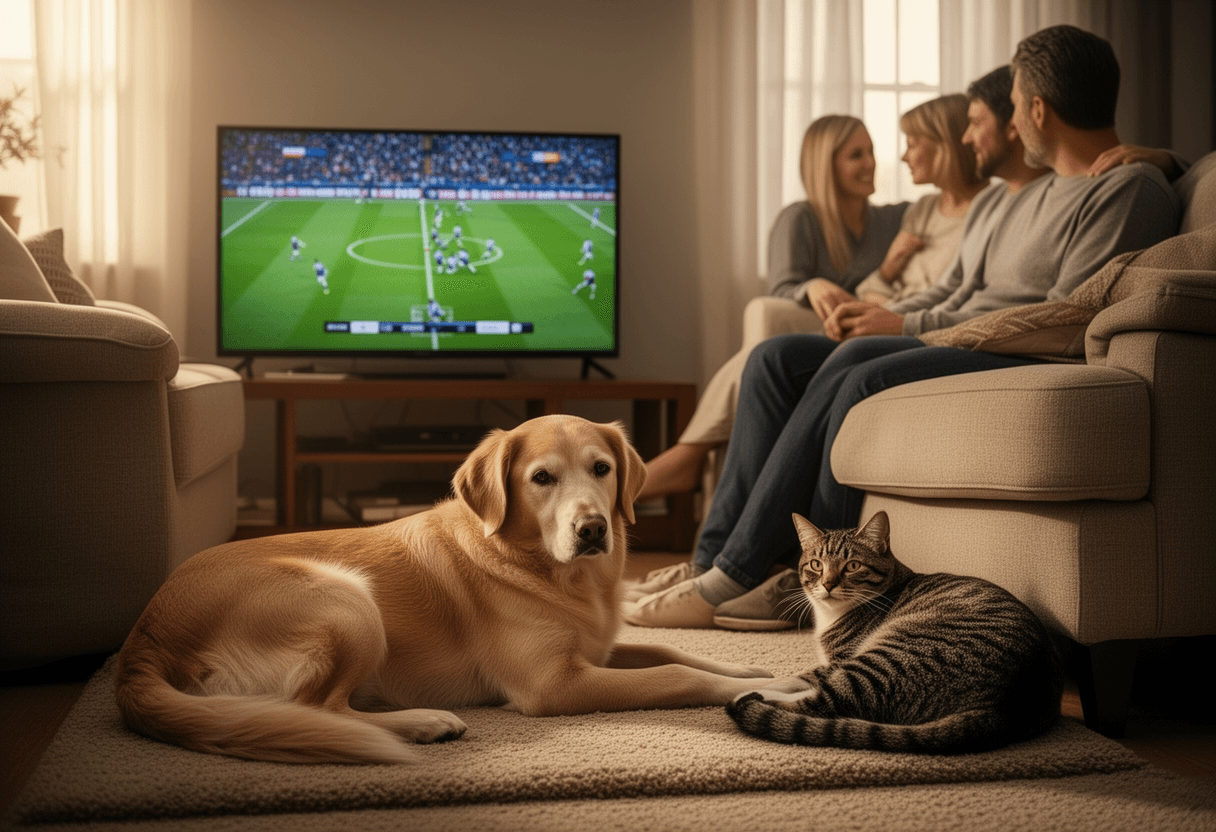
The living room changes its rhythm on match nights. Voices rise faster, hands clap without warning, and the coffee table fills with glasses, shifted cushions, snacks, and sometimes a jersey dropped over the sofa. In the middle of all that excitement, your dog, cat, rabbit, or other companion notices everything: the noise, the gestures, the smells, the happy tension, and also the small changes in the landmarks that usually make home feel predictable.
Sharing the World Cup with your pet can become a gentle moment, as long as you do not forget what the evening feels like from their side. An animal does not need to understand football rules to sense that something important is moving through the house. They may look for your presence, become restless, hide, ask for a familiar routine, or simply sleep close to you while the match goes on.
For some families, this season can also bring back the memory of an animal who died. A bed still near the sofa, a photograph on a shelf, a match-night habit that no longer happens: shared joy can live beside a very real absence. There is nothing strange about smiling at a goal and then feeling a sudden ache because your companion is no longer there.
Prepare a quiet space before the match
Before guests arrive or the game begins, think about where your animal can settle without being disturbed. This place should remain accessible, familiar, and reassuring: their bed, a blanket they know, a room with the door left ajar, or a corner farther from the television. The goal is not to separate them from the family on principle, but to give them a choice.
On match nights, sudden sounds are often harder for animals than steady volume. A shout of surprise, someone jumping up from the sofa, or a hand hitting the table can worry a sensitive companion. If your animal reacts to loud sounds, lower the television slightly, avoid indoor horns, and tell your guests simply: here, we celebrate, but we also respect the animal.
For a dog, a short walk before kick-off can help release excitement. For a cat, make sure the usual hiding places are still free. For a rabbit or small animal, move the cage or enclosure away from speakers, drafts, and heavy foot traffic. These gestures may seem modest, but they show that the celebration is not being built at the expense of their comfort.
Keep the routines that reassure them
Animals find safety in repetition. Mealtime, a walk, playtime, the usual spot near you: these details form the quiet structure of everyday life. During a tournament, schedules can shift, human meals can last longer, and evenings can become louder. Try to protect at least the landmarks that matter most.
Serve their food at the usual time if you can. Keep their water in a calm place, away from feet and spilled drinks. If your dog expects a walk before sleeping, do not remove it because the match runs late. If your cat likes a quiet moment after eating, do not force them to stay in the living room to be part of the atmosphere.
Celebrating does not mean sharing everything. Some animals enjoy being at the heart of the home, sniffing visitors, and settling on a throw near the sofa. Others prefer to disappear until the house is calm again. Respecting that choice is a very practical form of affection. Your companion does not have to become the mascot of the evening, wear an accessory, or pose for photos if they do not want to.
Celebrate without putting your animal at risk
On football nights, food quickly becomes easy to reach: crisps, dips, chocolate, alcohol, chicken bones, salty leftovers. Many of these foods are unsuitable, and some are dangerous for animals. Tell your guests before kick-off that nobody should feed your animal without your agreement. This simple rule prevents well-meaning but risky gestures.
Decorations deserve attention too. Garlands, ribbons, small flags, strings, and chewable objects can attract a curious cat or a playful dog. Jerseys and scarves are not a problem if they stay out of reach, but anything tight around the neck or body can become uncomfortable. A photograph is never worth more than an animal’s peace.
If your companion is elderly, ill, or recovering, adapt the atmosphere even more carefully. A senior animal may be more sensitive to noise, fatigue, and movement around the home. An animal being treated for illness may need quiet, medication at a fixed time, or a specific meal. Sporting excitement must remain compatible with their physical reality. If this is a fragile time, advice about Nutrition and Comfort for Senior Pets can also help you think about comfort beyond the match itself.
Create a small shared ritual
The World Cup with your pet can also become a soft ritual, without turning it into a performance. You might place their blanket near you, prepare a safe treat, begin the match with a calm stroke, or keep their usual place on the sofa if that is part of your bond. These simple gestures are often the ones that stay in memory.
If you live alone, an animal’s presence can make the evening feel less empty. Talking to them during the match, commenting on a play, laughing at their reaction when you clap: this familiar dialogue belongs to your private life. It does not need to be spectacular to matter. A life companion also accompanies small human passions, even when they understand them in their own way.
With children, the moment can become a lesson in respect. You can love your team loudly without shouting next to the dog’s ears. You can want guests to see your cat without pulling the cat out of a hiding place. You can share joy without turning the animal into a toy. The celebration then becomes a way to practise gentleness.
When the excitement awakens absence
If your animal has died, major events can bring their absence back with unexpected force. Maybe they always slept through matches. Maybe they barked when everyone shouted. Maybe they came to ask for affection at half-time. These memories are not small details: they describe a real place in your life.
You may choose to give them a symbolic place during a game. Lighting a small lamp, placing their photo near the living room, keeping their collar in an open box for a few hours, or laying out the blanket they loved can support the bond without denying death. It is not about forcing sadness into a joyful moment, or pretending everything is fine. It is about letting your whole story exist.
Some people feel guilty for laughing after an animal’s death. Yet joy does not erase love. Watching a match, inviting people over, or celebrating a goal does not mean you have forgotten your companion. Pet grief can contain lightness, then a wave of pain, then another smile. This movement is human.
Welcome guests with kindness
If people are coming over, state your animal’s needs clearly. One sentence is enough: please do not feed them, they need quiet, do not pick them up, they may hide. Respectful guests will understand. People who know animals less well sometimes simply need precise guidance.
Also leave an emotional exit for yourself. If the evening becomes too loud, if the memory of an animal who died tightens your throat, or if your living companion seems stressed, you have the right to step away for a few minutes. Going into another room, breathing, stroking your animal, looking at a photo, drinking a glass of water: this discreet pause can keep the celebration from becoming too heavy.
Sporting excitement is beautiful when it brings people together without overwhelming anyone. Your companion, living or dead, belongs to your family story. Keeping a fair place for them means recognizing that big moments are not lived only in front of a screen, but also in the quiet bonds around us.
If you would like to honor an animal who died during this season of memories and gathering, you can create a gentle memorial on Animal Paradise. A dedicated page lets you keep their name, their story, photos, and what they continue to represent for you.
Frequently asked questions
- Can I watch a match with my dog or cat near me?
- Yes, if your animal seems comfortable. Keep the volume reasonable, let them leave if they want to, and avoid forcing them to stay in the match atmosphere.
- Which party foods should I avoid giving my animal?
- Avoid chocolate, alcohol, crisps, dips, very salty foods, cooked bones, and spicy leftovers. Ask guests not to give anything without your agreement.
- How can I help an animal who is afraid of shouting during a match?
- Prepare a quiet room, lower the volume, partly close the door if that reassures them, and keep familiar objects nearby. Do not scold them if they hide.
- Is it a good idea to dress my animal in team colors?
- Only if the accessory is light, safe, and accepted by the animal. If they freeze, struggle, scratch, or try to remove it, it is better to stop.
- Why can a match revive grief for an animal who died?
- Big family moments can bring back shared habits. An empty place, a bed, or a remembered sound can make the absence sharper, even during a joyful evening.
- How can I honor my animal who died during the World Cup?
- You can place a photo, light a small lamp, tell a memory, or create an online memorial. Choose a simple gesture that genuinely soothes you.
Create a memorial for your pet
Pay a lasting tribute to your companion by creating a personalised memorial page. Share your memories and keep their spirit alive.
Create a memorialRelated articles
H5N1 Bird Flu in Cats: Reducing the Risks
A calm, practical guide to H5N1 risk in cats, including raw food, wild birds, warning signs, home hygiene, and when to call a veterinarian.
Adopting a Senior Pet From a Shelter in 2026
A calm, practical guide to welcoming an older shelter animal with clarity, patience, realistic care, and love that respects age and dignity.
Heatwave and Extreme Heat: Helping Animals
Simple, safe ways to protect pets, garden birds and small wildlife during very hot weather, with water, shade, quiet routines and warning signs to watch.