Heatwave and Extreme Heat: Helping Animals
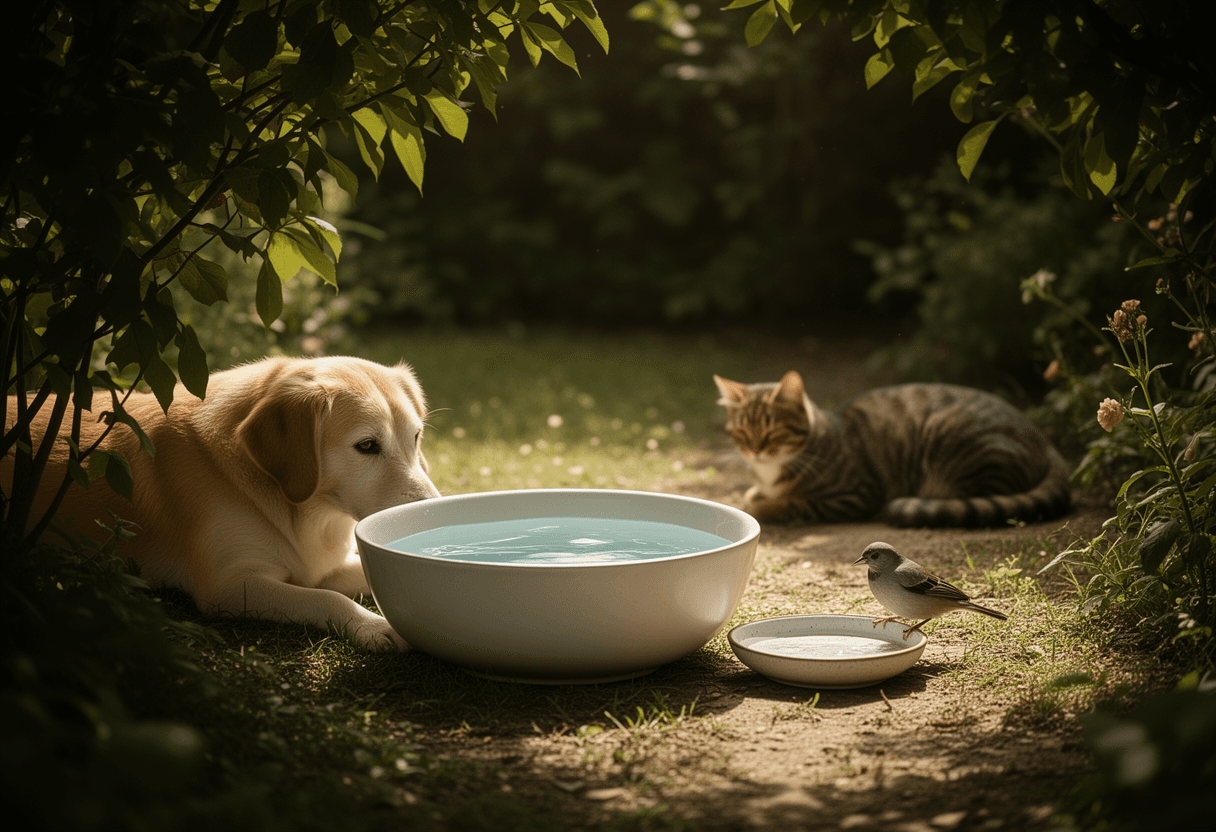
The morning already feels heavy, the shutters stay half closed, and the patio floor warms faster than usual. The dog searches for the cool tiles, the cat disappears under a piece of furniture, and the birds slow their back-and-forth flights. On days when the air seems still, animals cannot always show clearly that the heat is hurting them.
A heatwave and extreme heat call for simple, steady, almost quiet gestures: moving a water bowl closer, creating shade, giving up a walk that would be too late or too long, filling a shallow dish for a blackbird, a hedgehog or a bee. These small acts can prevent serious exhaustion, sometimes death, especially in animals who are old, ill, very young or already fragile.
Helping animals in high temperatures is not only about those who live inside the home. It also means looking at the balcony, the doorstep, the garden, the shared courtyard, and asking where a living creature could find water safely.
Understanding the risks without panicking
Dogs, cats, rabbits, pet birds and small mammals do not all regulate body temperature the way humans do. Many sweat very little, or not at all. They release heat through breathing, through their paw pads, by choosing cooler places, or by reducing activity. When the air stays hot through the day and night, these natural defences may no longer be enough.
An animal in distress may pant heavily, drool, stagger, vomit, refuse to move, seek isolation or seem confused. In cats, the signs can be more subtle: fast breathing, unusual tiredness, very warm ears, refusal to eat, or an unfamiliar posture. A rabbit who sits hunched, breathes quickly or stops eating must be taken very seriously.
Heatstroke is a veterinary emergency. It can damage organs and make an animal die in a short time. While waiting for veterinary advice, move the animal into shade or a cool room, dampen the body gradually with cool but not icy water, offer water without forcing it, and call a clinic quickly. Ice baths, frozen towels left on the body for a long time, or sudden soaking can worsen the shock.
Protecting companion animals at home
For dogs, the priority is to go out early in the morning and late in the evening, once the ground has cooled. Asphalt, paving stones and sand can burn paw pads. A simple test is to place the back of your hand on the ground for a few seconds: if it is too hot for you, it is too hot for your dog. Energetic games, running and long walks need to wait.
At home, several water stations are better than one bowl. Put them in different rooms, away from direct sun, in stable containers that cannot be knocked over easily. Some cats drink more when water is placed away from food, or when it is served in a wide bowl that does not touch their whiskers. A fountain can help, provided it is cleaned often.
For cats, keep access open to the coolest rooms: a bathroom, a healthy cellar, a tiled hallway. Close shutters before the sun comes in, ventilate only during cooler hours, and create shaded areas. A slightly damp cloth placed nearby, without forcing the animal to lie on it, can offer another option. Fans should not blow directly onto an animal trapped in a space with no way to move away.
Cages and enclosures need particular care. Rabbits, guinea pigs, birds and ferrets must never be left behind a sunny window, on a balcony without shade, or in a room that heats up quickly. Move their living space to the coolest safe area, check water several times a day, and protect both bottles and bowls from direct sunlight.
Setting up safe water points for birds
A heatwave and extreme heat can be harsh on birds, because puddles vanish, soil dries out and insects become scarcer. A dish of clean water can become a real refuge, especially in towns or in gardens with a lot of stone and concrete.
Choose a shallow container, such as a plant saucer, a soup plate or a small bird bath. Two to five centimetres of water is enough. Add a few flat stones or a steady twig so small birds can land without slipping. The edge should be easy to reach, not sharp, and the whole container heavy enough not to tip over.
Where you put the water matters as much as the water itself. Place it somewhere shaded for part of the day, away from large windows and from areas where a cat could pounce easily. In a garden, an open spot near a shrub is a good compromise: the bird can see danger coming and reach cover quickly. On a balcony, secure the container well and avoid any risk of it falling.
Change the water every day, more often if it becomes dirty. Mosquitoes lay eggs in standing water, and soiled water can spread disease. A firm rinse, without scented products, is often enough. If you use soap, rinse for a long time.
Helping garden wildlife without putting it at risk
Hedgehogs, squirrels, lizards, bees, butterflies and small mammals also look for water. For them, the main danger is sometimes the container itself. A deep basin, a forgotten bucket or an unprotected pool can trap an exhausted animal and make it die by drowning.
Choose low, heavy containers with a gentle slope or stones that rise above the water. For insects, a dish filled with wet pebbles lets them drink without falling in. For hedgehogs, a shallow plate or plant saucer placed at ground level works well. Never give milk: it can cause serious digestive problems. Clean water is the best help.
Avoid chemicals near water points: mosquito products, strong cleaners, pellets, insecticides, essential oils. Even a small amount can be toxic. If you treat a patio or plants, remove the dishes, clean them and put them back later in a safe area.
A garden that supports life in hot weather is not always a perfectly tidy one. A patch of slightly taller grass, a pile of leaves, a hedge, grouped pots, or a corner of undisturbed soil creates shelter and keeps moisture. At night, if possible, leave an exit for wild animals trapped in a closed courtyard, without handling them unnecessarily.
Common mistakes to avoid
The first mistake is assuming an animal will always drink when thirsty. A stressed, old, ill or painful animal may not make the effort to move. Bringing water closer, offering several bowls and watching how much is actually drunk can help a great deal.
The second is leaving water in full sun. It warms quickly, becomes less appealing, and encourages bacteria. Several small water points refreshed often are better than one large container forgotten for days.
The third is mowing, trimming or clearing brush during the hottest hours. These jobs remove shelter exactly when wildlife needs it most. If maintenance is necessary, choose the morning, move slowly, and check tall grass and leaf piles before using a machine.
The fourth is taking an animal in the car without preparation. Even for a few minutes, the inside of a car can become deadly. Never leave an animal in a parked car, even with a window slightly open. For an essential journey, plan water, shade, good ventilation and calm breaks.
Keeping a gentle watch, even after the emergency
When temperatures fall, animals may still be tired. Continue to watch appetite, breathing, interest in play, gait and toilet habits. A lasting change deserves veterinary advice, especially after an episode of collapse or distress.
If an animal died during a period of heat, guilt can feel very heavy. Many people replay every detail, search for the one gesture that might have changed everything, and blame themselves for not understanding soon enough. That pain is real. It deserves to be met without judgment. An accident, an illness, a hidden weakness or a sudden rise in temperature can overwhelm even attentive people. If the grief feels invisible to others, reading about the pain of pet loss may help put words around it.
Preparing water points for other animals can then become an act of memory, not a way to erase the loss. Filling a dish each morning, planting a shrub, leaving a shaded patch, protecting birds and small wildlife: these are simple acts that extend the love that was given.
If you would like to keep a trace of your animal, tell their story and honour what they brought to your life, you can gently create a memorial at /en/animal/create.
Frequently asked questions
- How many water points should I provide for a dog or cat?
- Ideally, provide at least two water points in cool, quiet places. For an older, ill or less mobile animal, add a bowl near their resting place so they do not have to cross the whole home.
- Can I put ice cubes in my pet’s water bowl?
- A few ice cubes can be offered if your animal tolerates them, but the water should not become icy. Fresh water, changed often, is usually safer and better accepted.
- What kind of container is best for garden birds?
- A shallow, stable and easy-to-clean container is ideal. Add stones or a small branch to prevent slipping and allow birds to drink or bathe safely.
- Should I feed wild animals during very hot weather?
- Water is the priority. Feeding wildlife can attract too many animals to one place or create dependence. If you help, focus on clean water, shade and natural shelter.
- When should I call a veterinarian in hot weather?
- Call quickly if the animal pants heavily, staggers, vomits, seems confused, breathes fast, collapses or no longer reacts as usual. Heatstroke can make an animal die and must be treated as an emergency.
Create a memorial for your pet
Pay a lasting tribute to your companion by creating a personalised memorial page. Share your memories and keep their spirit alive.
Create a memorialRelated articles
H5N1 Bird Flu in Cats: Reducing the Risks
A calm, practical guide to H5N1 risk in cats, including raw food, wild birds, warning signs, home hygiene, and when to call a veterinarian.
Adopting a Senior Pet From a Shelter in 2026
A calm, practical guide to welcoming an older shelter animal with clarity, patience, realistic care, and love that respects age and dignity.
World Cup With Your Pet Companion
How to enjoy World Cup match nights with your pet while protecting their comfort, safety, routines, and the memory of an animal who died.