H5N1 Bird Flu in Cats: Reducing the Risks
A cat comes back from the garden with damp whiskers, a bowl of raw meat has been prepared with care, birds land near the patio: these scenes can feel completely ordinary. They are part of daily life in many homes where people want to give their cat freedom, thoughtful food, and a life that feels as natural as possible.
Since the warnings linked to H5N1, many cat caregivers have felt caught between worry and the need to understand. The fear can feel stronger because a cat is not only a companion animal. He may sleep close to us, share our routines, stay beside us through difficult days, and his death can leave a huge silence in the home.
H5N1 bird flu in cats deserves serious attention, but not panic. Reported cases are usually linked to specific situations, including exposure to infected birds, dead animals, contaminated raw meat, or raw milk. The goal is not to blame families, but to help everyone reduce risk through clear, practical steps.
Understanding H5N1 without panic
H5N1 is an avian influenza virus that circulates mainly among birds. Some wild birds can carry it with few or no visible signs, while others become severely ill or die. Poultry farms can also be affected, which is why outbreaks often lead to strict health measures.
A cat may be exposed by eating an infected bird, chewing on a carcass, coming into contact with contaminated droppings, or consuming a contaminated raw animal product. It is comforting to imagine that instinct protects cats from danger, but this is not always true. A curious cat, a hunter, or an animal drawn by smell may approach a source of contamination before his human notices anything is wrong.
Possible signs in cats can include extreme tiredness, fever, loss of appetite, breathing problems, discharge from the nose or eyes, tremors, an abnormal walk, seizures, or a sudden change in behavior. These signs do not prove an H5N1 infection on their own, but they do justify prompt contact with a veterinarian, especially if the cat has had access to wild birds, raw poultry, or raw milk.
One important nuance matters: not every exposed cat becomes ill, and not every tired cat has bird flu. But when there has been a real risk, waiting several days to see whether things improve can cost precious time.
Why raw feeding requires particular care
Raw feeding is often chosen with good intentions: to control ingredients more closely, avoid certain industrial products, or move closer to a diet perceived as natural. For some families, preparing raw meals even becomes a ritual of care. That is exactly why the subject needs to be treated with respect, not caricature.
The concern is that H5N1 can contaminate raw animal products if the health chain has been affected. Raw poultry, some organ meats, unpasteurized products, and raw milk may pose a risk if the source is uncertain or if contamination occurs before purchase. Home freezing should not be treated as a reliable guarantee against every infectious hazard. Cooking remains one of the most dependable ways to greatly reduce the risk.
For a cat, the danger is twofold. First, he eats the food directly. Second, preparation at home can contaminate a cutting board, knife, bowl, sponge, countertop, or hands. Even if the cat does not become ill, hygiene matters for other animals in the household and for humans, especially children, older people, and anyone with a weakened immune system.
A simple precaution is to pause higher-risk raw foods during local or national alerts, especially raw poultry, raw organ meats, and raw milk. Complete cooked foods, home-cooked diets approved by a veterinarian, or a temporary transition to a high-quality commercial diet may be safer options.
Contact with wild birds: situations to avoid
A cat who hunts is not a bad cat, and his caregiver is not a bad human. But when considering H5N1 bird flu in cats, hunting wild birds becomes a significant exposure. The risk rises if dead birds have been reported in the area, if nearby lakes or wetlands attract many migratory birds, or if domestic poultry have been affected close to home.
The first rule is never to let a cat approach a sick or dead bird. A bird that does not flee, turns in circles, breathes with difficulty, remains still and hunched, or is found dead should be treated as suspicious. It should not be picked up with bare hands. Depending on the country or municipality, there may be a veterinary, local authority, or environmental service to notify.
For a cat used to going outdoors, reducing outings can be hard. You can start by limiting the times when hunting is most likely, especially early morning and dusk. Keeping the cat indoors during health alerts, creating a secure outdoor area, supervising time outside, or using a harness for some cats can all be possible compromises. The aim is not to change his life brutally, but to reduce opportunities for direct contact.
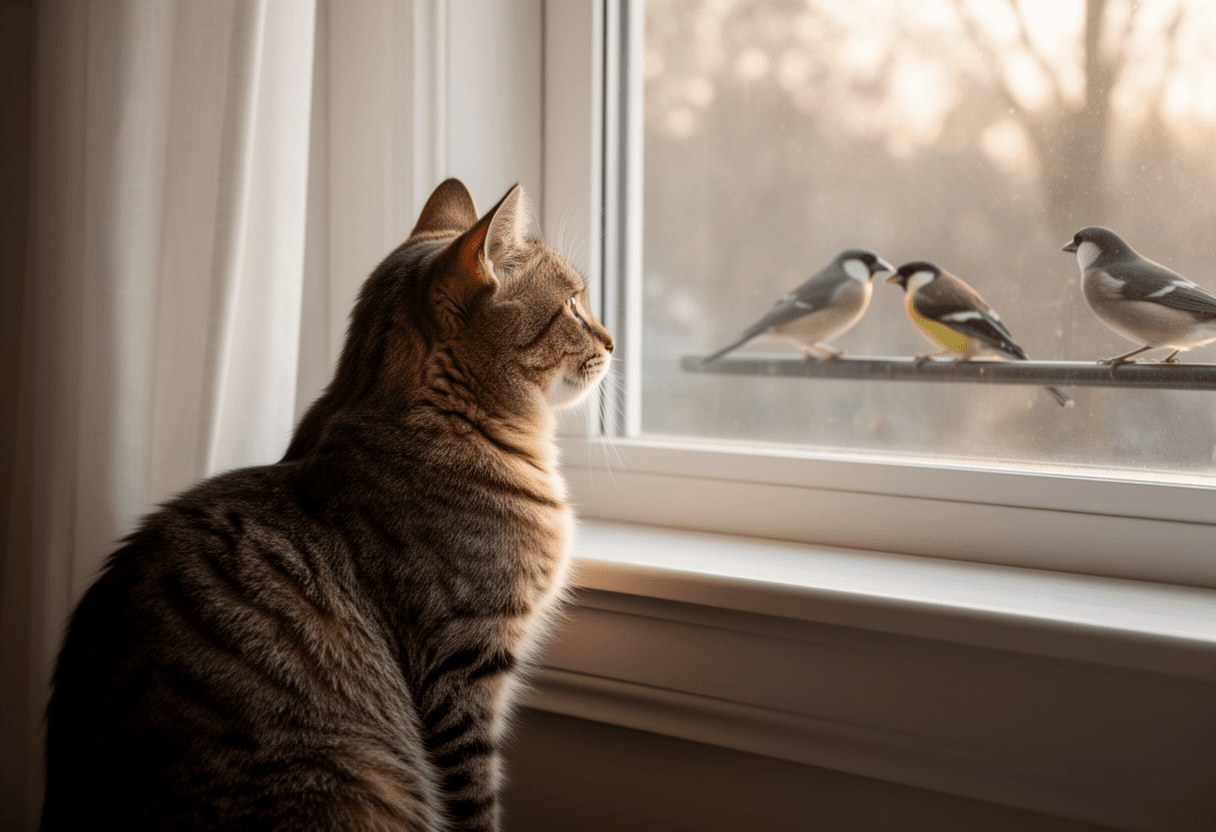
Bird feeders also need caution. They can attract birds close to windows, terraces, and areas where the cat moves around. If a feeder is kept in place, it should be out of the cat’s reach, cleaned regularly, and temporarily removed if sick or dead birds are seen nearby.
Practical steps at home
Prevention often begins with very simple decisions. Keeping bowls clean, washing surfaces after meal preparation, separating utensils used for raw meat, throwing away leftovers quickly, and washing hands are basic habits. They may seem modest, but they reduce several risks at once.
If your cat goes outside, observe him when he comes back. Traces of feathers, a strong smell, a prey animal brought home, or unusual tiredness should catch your attention. If he brings back a dead bird, avoid handling it directly. Wear gloves, place the carcass in a sealed bag if local rules allow it, clean the area, and wash your hands carefully afterward. If you are unsure what to do, call your veterinarian and explain exactly what happened.
In homes with several animals, it is better to avoid shared bowls after a suspicious exposure. A cat who has eaten a bird or a higher-risk raw food can be monitored separately, without creating a frightening isolation, but with enough distance to follow his appetite, breathing, temperature if the veterinarian recommends it, and general behavior.
It can also help to write down the facts: date, place, type of contact, food eaten, and any symptoms. Under stress, memory becomes blurred. These details will help the veterinarian assess the urgency more accurately.
When to call the veterinarian without waiting
Call promptly if your cat has been in contact with a sick or dead bird, has eaten raw poultry or raw milk during an alert, or develops unusual signs in the following days. Neurological symptoms, such as loss of balance, tremors, disorientation, or seizures, should be treated as urgent.
Contact the clinic before going there. This simple precaution helps the veterinary team organize the visit, protect other animals, and tell you what to do. Do not arrive with a potentially infected cat without warning, even if anxiety makes you want to leave immediately.
Avoid self-medication. Some human medicines are dangerous for cats. Even a treatment given with love can make the situation worse. If the cat refuses food, struggles to breathe, hides, seems painful, or no longer reacts as usual, he needs professional advice.
The death of a cat after a sudden illness is a profound shock. Families often wonder whether they should have noticed something earlier, acted differently, or prevented the worst. When a serious infectious disease is involved, guilt can become overwhelming. Yet the role of a caregiver is not to foresee everything. It is to observe, protect as much as possible, and ask for help when a sign feels worrying.
Protecting without living in fear
Living with a cat means accepting a degree of unpredictability. He climbs, explores, sometimes hunts, refuses perfectly reasonable decisions, and then comes back seeking closeness as if nothing happened. H5N1 prevention should not erase that relationship. It should simply add a few clear markers during periods when the risk is more present.
Three priorities are worth remembering: avoid higher-risk raw foods, prevent contact with sick or dead birds, and call the veterinarian if symptoms appear after a possible exposure. These steps do not promise absolute safety, but they provide real protection.
If your cat died after a sudden illness, or if this concern brings back the memory of an animal who already died, it is normal to feel sadness, anger, or the need to tell the story. A memorial can offer a quiet place to gather a photo, a name, dates, memories, and everything your companion changed in your life. You can create that space gently at /en/animal/create.
Frequently asked questions
- Can a cat get H5N1 by eating a wild bird?
- Yes. This is a risk situation, especially if the bird is sick or dead. Keep the cat away, avoid handling the bird with bare hands, and call a veterinarian if the cat bit or ate it.
- Is raw feeding dangerous for all cats?
- It does not automatically cause illness, but it can increase infectious risks if products are contaminated. During an H5N1 alert, it is safer to avoid raw poultry, raw organ meats, and raw milk.
- Which signs should worry me after a possible exposure?
- Extreme tiredness, loss of appetite, fever, difficult breathing, tremors, an abnormal walk, disorientation, or seizures should prompt a quick call to the veterinarian.
- Should I keep my cat indoors during a bird flu alert?
- If cases are reported near you, keeping your cat indoors or greatly limiting outdoor access reduces the risk of contact with wild birds, droppings, or contaminated carcasses.
- What should I do if my cat brings a dead bird home?
- Move the cat away, do not touch the bird with bare hands, wear gloves, follow local rules for reporting or disposal, clean the area, and contact your veterinarian if the cat bit or ate it.
Create a memorial for your pet
Pay a lasting tribute to your companion by creating a personalised memorial page. Share your memories and keep their spirit alive.
Create a memorialRelated articles
Adopting a Senior Pet From a Shelter in 2026
A calm, practical guide to welcoming an older shelter animal with clarity, patience, realistic care, and love that respects age and dignity.
Heatwave and Extreme Heat: Helping Animals
Simple, safe ways to protect pets, garden birds and small wildlife during very hot weather, with water, shade, quiet routines and warning signs to watch.
World Cup With Your Pet Companion
How to enjoy World Cup match nights with your pet while protecting their comfort, safety, routines, and the memory of an animal who died.